Vienna Like a Local: Coffee Houses, Markets, Wine Taverns and Hidden Courtyards
Vienna beyond the palaces: historic coffee houses, the Naschmarkt, Klimt, a giant Ferris wheel, vineyard wine taverns and cheap standing opera tickets.
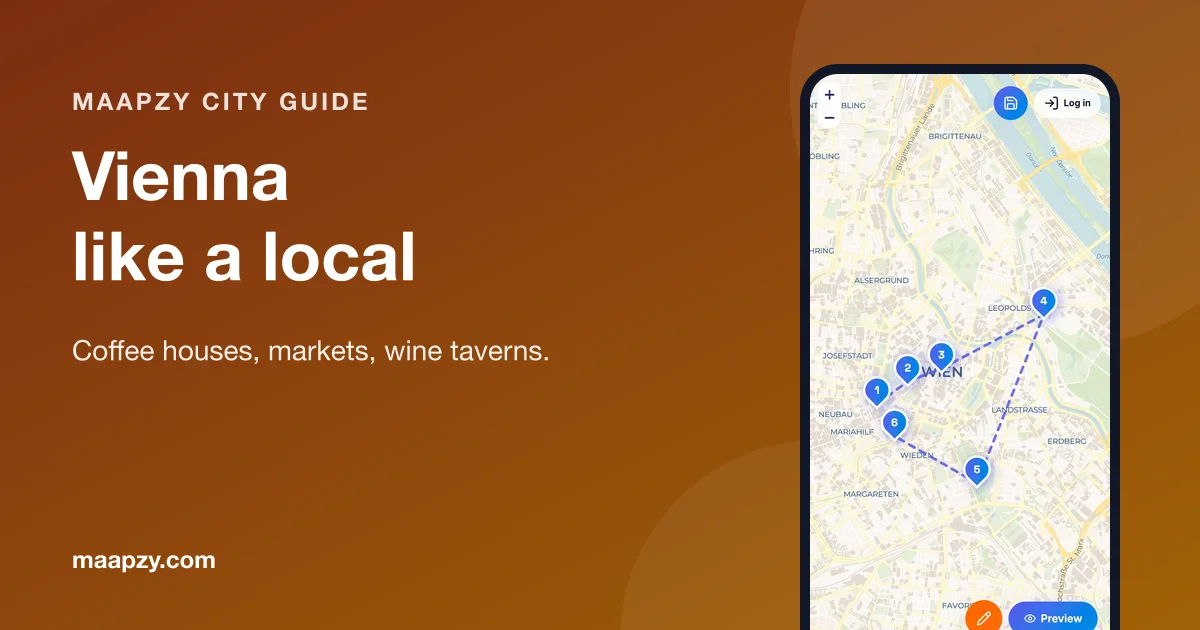
Vienna is regularly voted one of the most liveable cities in the world. It's easy to see why: grand architecture, superb public transport, parks everywhere, vineyards within the city limits and a café culture that UNESCO lists as intangible heritage. Here's how to enjoy it beyond the big palaces.
Vienna on the map
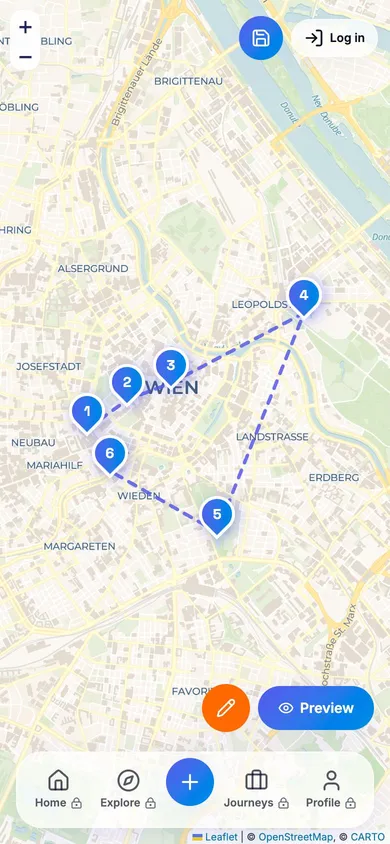
The historic centre sits inside the Ringstrasse, a grand boulevard that replaced the old walls. Trams, the U-Bahn and buses make everything easy to reach. A 24-, 48- or 72-hour ticket is good value, and you rarely wait more than a few minutes for a tram.
The centre and the Hofburg
- 1. St Stephen's Cathedral: climb the 343 steps of the South Tower for views over the tiled roof.
- 2. The Hofburg: the imperial palace, with the Sisi Museum and the Imperial Apartments.
- 3. The Spanish Riding School: watch the Lipizzaner horses at morning training.
- 4. The Albertina: a palace museum with a strong collection of modern art.
- 5. The State Opera: standing tickets go on sale on the day and cost only a few euros.
MuseumsQuartier and Mariahilf
The MuseumsQuartier is one of the largest cultural districts in the world, set in the former imperial stables. The Leopold Museum has the world's largest Egon Schiele collection. In summer, the courtyards fill with locals lounging on colourful seats. Nearby, Mariahilfer Strasse is the city's main shopping street.
Naschmarkt and Karlsplatz
- 6. Naschmarkt: Vienna's most famous market, with food stalls and restaurants. A flea market runs alongside on Saturdays.
- 7. Secession Building: a golden-domed Art Nouveau hall with Klimt's Beethoven Frieze.
- 8. Karlskirche: a baroque church with a huge dome and twin columns.
- 9. Café Sperl: a classic coffee house near the Naschmarkt, almost unchanged since the 19th century.
Belvedere and the Prater
- 10. Belvedere Palace: home to Klimt's The Kiss and baroque gardens with city views.
- 11. The Prater: a huge park with the Giant Ferris Wheel (Riesenrad), built in 1897.
- 12. The Hauptallee: a long chestnut avenue through the Prater for cycling and walking.
- 13. Hundertwasserhaus: a colourful, wavy apartment building with trees on its balconies.
The coffee house ritual
In a Viennese coffee house, you can sit for hours with one coffee and a newspaper. Order a Melange (similar to a cappuccino) and a slice of cake: Sachertorte, apple strudel or Esterházy torte. Classic coffee houses include Café Central, Café Prückel, Café Hawelka and Café Sperl. Your coffee always comes with a glass of water.
Heurigen: wine taverns in the vineyards
Vienna is one of the few capitals with vineyards inside its borders. A Heuriger is a wine tavern where producers serve their own young wine with cold cuts and spreads. Take a tram or bus to Grinzing, Nussdorf or Stammersdorf, and look for a pine branch hanging over a door: it means the tavern is open.
Schönbrunn and day trips
Schönbrunn Palace, the summer residence of the Habsburgs, has 1,441 rooms and enormous gardens. Climb to the Gloriette for the view, and buy a ticket to the palace rooms in advance. For a day trip, take the train to the Wachau Valley for vineyards and abbeys along the Danube, or to Bratislava, about an hour away.
Getting around and saving money
A Vienna City Card or a simple 72-hour transport ticket covers trams, buses and the U-Bahn. Many museums have reduced evening hours or free days for certain groups; check before you go. Lunch menus (Mittagsmenü) in local restaurants are much cheaper than dinner. And tap water in Vienna comes straight from Alpine springs, so refill your bottle anywhere.
Eating and drinking
- Wiener Schnitzel: a thin breaded veal cutlet, served with potato salad
- A sausage from a Würstelstand: try a Käsekrainer late at night
- Tafelspitz: boiled beef with apple-horseradish sauce
- Sachertorte and apple strudel in a coffee house
- A Spritzer: white wine with sparkling water, Vienna's summer drink
Vienna is part of our Austria itinerary and our Prague, Vienna and Budapest route. Budapest is about 2 hours 40 minutes away by train; see our Budapest guide.
Vienna like a local
- Climb St Stephen's South Tower
- Buy a standing ticket at the State Opera
- Browse the Naschmarkt (flea market on Saturdays)
- See Klimt's The Kiss at the Belvedere
- Ride the Giant Ferris Wheel in the Prater
- Linger over a Melange in a classic coffee house
- Drink young wine at a Heuriger in the vineyards
- Save your favourite cafés in recommendations
Frequently asked questions
How do I get cheap opera tickets in Vienna?
The State Opera sells standing-room tickets for just a few euros, usually on the day of the performance. Check the official website for current rules and times.
What is a Heuriger?
A wine tavern run by a winemaker, serving their own young wine with simple food. Many are in the vineyard districts of Grinzing, Nussdorf and Stammersdorf.
How many days do you need in Vienna?
Two to three days covers the main sights and a coffee house or two. Add a day for the Wachau Valley or Bratislava.
Which coffee house should I visit?
Café Central is the grandest, Café Sperl and Café Prückel feel more local, and Café Hawelka is famous for its bohemian history.
Sources
Start your next trip on a map.
Pin a few cities and see what a realistic route looks like — in five minutes, for free.
Open the plannerKeep reading
- Copenhagen Like a Local: Bikes, Harbour Baths, Street Food and HyggeCopenhagen beyond Nyhavn: swim in the harbour, cycle like a Dane, eat at a waterfront street-food market, explore Nørrebro and ski on a power plant.
- Things to Do in Edinburgh: Castles, Volcanoes and Hidden VillagesThe best things to do in Edinburgh: the castle and Royal Mile, a hike up Arthur's Seat, sunset on Calton Hill, Dean Village, Stockbridge and Leith.
- Things to Do in Kyoto: Temples, Gardens and How to Beat the CrowdsThe best things to do in Kyoto and when to go: Fushimi Inari at dawn, Kiyomizu-dera, Gion's evening streets, the bamboo grove and quieter temples.