Things to Do in Budapest: Thermal Baths, Ruin Bars and the Danube by Night
The best things to do in Budapest: thermal baths, Fisherman's Bastion at sunrise, the Parliament, ruin bars, the Great Market Hall and the Danube at night.
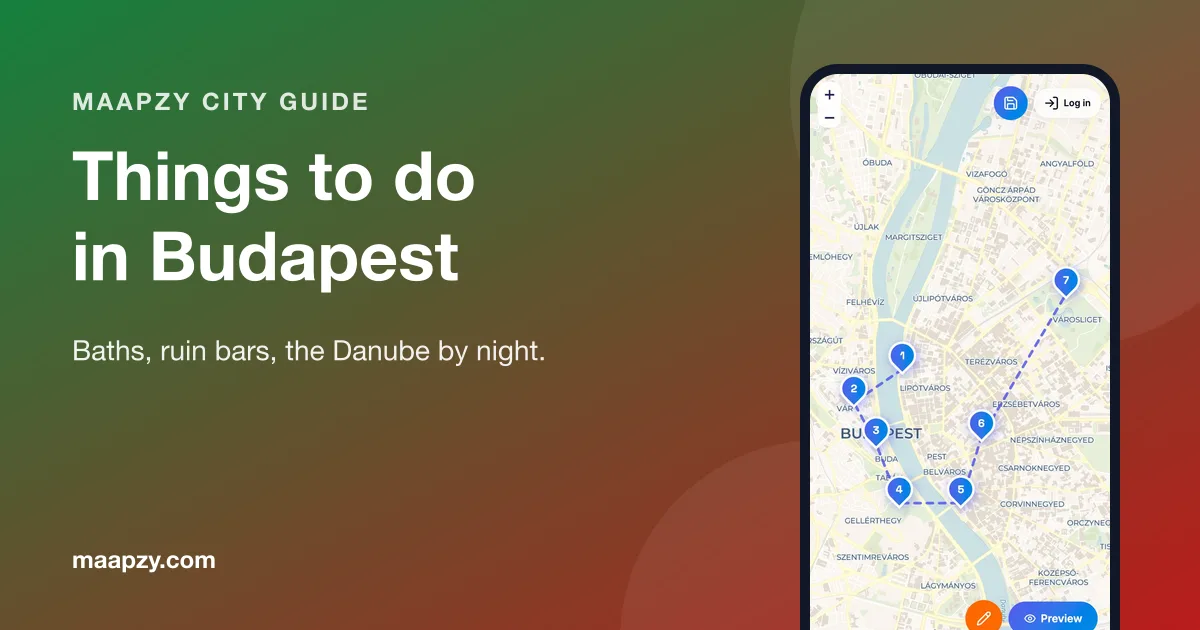
Budapest is two cities in one. Buda, on the west bank, is hilly and green, with a castle district and viewpoints. Pest, on the east, is flat and buzzing, with grand boulevards, cafés and nightlife. Between them flows the Danube, crossed by beautiful bridges. Add natural hot springs and very reasonable prices, and you have one of Europe's best city breaks.
Budapest on the map
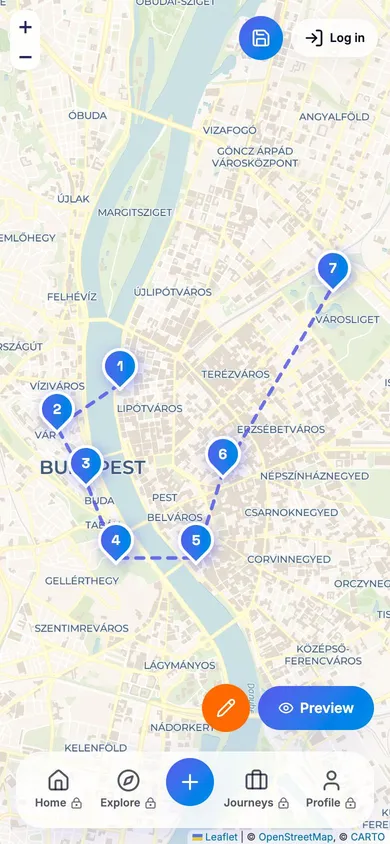
Trams, metro and buses are cheap and frequent. Tram 2, which runs along the Pest side of the Danube, is one of the most scenic tram rides in Europe. A 24- or 72-hour travel card covers all of it, so you can hop between Buda and Pest freely.
Buda: castle, bastion and hill
- Fisherman's Bastion: fairy-tale towers with views over the river and the Parliament. Go at sunrise; the lower terraces are free.
- Matthias Church: a colourful tiled roof right next to the bastion.
- Buda Castle: a huge palace housing the Hungarian National Gallery.
- Gellért Hill: climb to the Liberty Statue and the Citadel for the best panorama in the city.
The Parliament and the riverbank
The Hungarian Parliament is one of the largest parliament buildings in the world and the city's most famous sight. Guided tours show the grand staircase and the Holy Crown; book ahead. Nearby, the Shoes on the Danube Bank memorial, a row of iron shoes, honours Jews killed on the riverbank during the Second World War.
Thermal baths
Budapest sits on more than a hundred hot springs, and bathing is a daily ritual for many locals.
- Széchenyi Baths: an enormous neo-baroque complex from 1913 with outdoor pools, open all year. Locals play chess in the steaming water.
- Rudas Baths: a 16th-century Turkish bath with an octagonal pool and a rooftop pool with river views.
- Tips: bring flip-flops and a towel (or rent them), and go early or late on weekdays to avoid crowds.
The Jewish Quarter and ruin bars
Pest's seventh district is home to the Dohány Street Synagogue, the largest in Europe, with a moving memorial garden. The same streets are famous for ruin bars, set up in abandoned buildings and courtyards. Szimpla Kert, which opened in 2002, is the original, full of mismatched furniture and odd decorations. It also hosts a farmers' market on Sunday mornings.
The Great Market Hall
Budapest's largest covered market is a beautiful 19th-century building with a tiled roof. Downstairs, find paprika, salami and pickles; upstairs, food stalls sell lángos (fried dough with sour cream and cheese) and goulash. It's busy at lunchtime, so go mid-morning.
Andrássy Avenue and the City Park
Walk or ride the historic M1 metro, the oldest underground railway on the European continent, along Andrássy Avenue past the Opera House to Heroes' Square. Behind it, the City Park holds Vajdahunyad Castle, the Széchenyi Baths and new museums. Margaret Island, in the middle of the Danube, is a calm green escape with a musical fountain.
Budapest at night
The Danube is at its most beautiful after dark, when the Parliament, the Chain Bridge and Buda Castle are lit up. Take an evening river cruise, or simply walk along the Pest embankment and across a bridge. Gellért Hill and the Fisherman's Bastion also offer superb night views.
A two-day plan
Day 1 (Buda): sunrise at Fisherman's Bastion, Matthias Church, Buda Castle and the National Gallery, then the climb up Gellért Hill and an evening soak at the Rudas Baths. Day 2 (Pest): the Parliament tour in the morning, the Shoes on the Danube Bank, lunch at the Great Market Hall, the Dohány Street Synagogue in the afternoon, then the Széchenyi Baths and a ruin bar at night. Save a final hour for a walk along the river after dark.
What to eat
- Goulash (gulyás): a paprika-spiced beef soup, not a stew
- Lángos: deep-fried dough with sour cream and grated cheese
- Chicken paprikash: chicken in a creamy paprika sauce with dumplings
- Kürtőskalács: a chimney cake, cooked on a spit
- Dobos torte: a layered sponge cake with a caramel top
- Pálinka: a strong fruit brandy, often served as a welcome
Budapest is the last stop of our Prague, Vienna and Budapest itinerary. Coming from Vienna? See our Vienna local spots for the previous leg.
Budapest checklist
- Sunrise at Fisherman's Bastion
- Climb Gellért Hill for the panorama
- Book a Parliament tour
- Soak at Széchenyi or Rudas Baths
- Visit the Dohány Street Synagogue and Szimpla Kert
- Eat lángos at the Great Market Hall
- Ride tram 2 along the Danube
- Walk the river at night when the Parliament is lit up
- Save your favourite baths and bars in recommendations
Frequently asked questions
Which thermal bath is best in Budapest?
Széchenyi for its huge outdoor pools and grand architecture; Rudas for a historic Turkish bath and a rooftop pool with river views.
How many days do you need in Budapest?
Two to three days covers Buda, Pest, a thermal bath and an evening on the Danube.
What currency is used in Budapest?
The Hungarian forint (HUF). Cards are widely accepted; carry a little cash for markets and small shops.
Is Budapest expensive?
Budapest is cheaper than most western European capitals for food, drinks, transport and accommodation.
Sources
Start your next trip on a map.
Pin a few cities and see what a realistic route looks like — in five minutes, for free.
Open the plannerKeep reading
- Copenhagen Like a Local: Bikes, Harbour Baths, Street Food and HyggeCopenhagen beyond Nyhavn: swim in the harbour, cycle like a Dane, eat at a waterfront street-food market, explore Nørrebro and ski on a power plant.
- Things to Do in Edinburgh: Castles, Volcanoes and Hidden VillagesThe best things to do in Edinburgh: the castle and Royal Mile, a hike up Arthur's Seat, sunset on Calton Hill, Dean Village, Stockbridge and Leith.
- Things to Do in Kyoto: Temples, Gardens and How to Beat the CrowdsThe best things to do in Kyoto and when to go: Fushimi Inari at dawn, Kiyomizu-dera, Gion's evening streets, the bamboo grove and quieter temples.