6 Days in Provence: Marseille, Aix-en-Provence, Avignon and Arles
A 6-day Provence itinerary by train from Marseille to Aix, Avignon and Arles, with the Calanques, the Pont du Gard, lavender season and market days.

Provence is a feast for the senses: markets full of lavender and olives, Roman ruins, golden light that drew Van Gogh and Cézanne, and a coastline of white cliffs and turquoise coves. Its main towns are close together and linked by train, so you can see a lot without a car.
The route at a glance
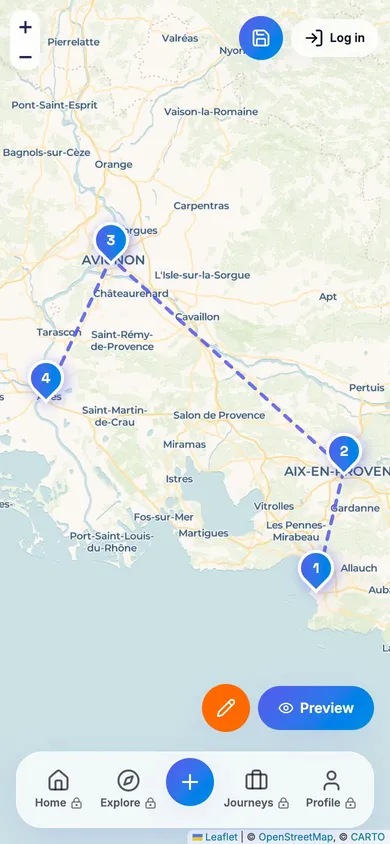
- Days 1–2: Marseille — the Old Port, Le Panier and the Calanques
- Day 3: Aix-en-Provence — fountains, markets and Cézanne
- Days 4–5: Avignon — the Palace of the Popes and the Pont du Gard
- Day 6: Arles — a Roman arena and Van Gogh's town
Days 1–2: Marseille
France's oldest city is gritty, sunny and full of character. Start at the Vieux-Port, where fishermen still sell their catch in the morning, then wander the steep lanes of Le Panier, the oldest quarter. Walk to the MuCEM, a museum in a lace-like concrete cube linked by a footbridge to Fort Saint-Jean. In the afternoon, climb or take the bus to Notre-Dame de la Garde for the best view of the city.
On day two, visit the Calanques National Park: dramatic limestone inlets with clear water. Take a boat trip from the Old Port, or hike to Sugiton or En-Vau. In summer, some access points require booking or close on high fire-risk days; check the national park website the day before.
Eat this
Bouillabaisse, the famous fish stew, is a full meal and usually pricey. Order it at a restaurant that specialises in it.
Day 3: Aix-en-Provence
Aix is Marseille's elegant neighbour, with tree-lined boulevards and more than a hundred fountains. Stroll the Cours Mirabeau, browse the morning market on the Place Richelme and visit Cézanne's studio, kept as he left it. If you have a car or join a tour, the Montagne Sainte-Victoire he painted again and again is nearby.
Getting there
Trains and buses from Marseille to Aix take about 35–45 minutes.
Days 4–5: Avignon and the Pont du Gard
Avignon was the seat of the popes in the 14th century, and the vast Palais des Papes still dominates the town. Walk out onto the famous broken bridge, the Pont Saint-Bénézet (the 'Pont d'Avignon' from the song), and explore the old streets inside the ramparts. In July, the Festival d'Avignon fills every square with theatre.
On day five, take the bus to the Pont du Gard, a three-tiered Roman aqueduct bridge over the Gardon river. You can swim in the river below in summer. Alternatively, join a tour to the hilltop villages of the Luberon, such as Gordes and Roussillon.
Getting there
Fast trains between Aix-en-Provence TGV and Avignon TGV take about 20 minutes. Local buses link the TGV stations with the town centres.
Lavender season
The lavender fields bloom from roughly late June to mid-July, depending on altitude and weather. The Valensole plateau and the Luberon around the Sénanque Abbey are the classic spots; you'll need a car or a tour.
Day 6: Arles
Arles packs Roman history into a small town: a 2,000-year-old amphitheatre still used for events, a Roman theatre and underground galleries. Van Gogh painted around 300 works here, and you can follow signs to the scenes he painted, such as the café on the Place du Forum. The Luma Arles tower by Frank Gehry adds a modern twist. Arles is also the gateway to the Camargue wetlands, with flamingos and white horses.
Getting there and home
Avignon to Arles takes about 20 minutes by train. Arles to Marseille takes about 50 minutes, for flights home from Marseille airport.
Market days
Provençal markets are a highlight. Aix has markets most mornings, Arles has a big Saturday market along the Boulevard des Lices, and L'Isle-sur-la-Sorgue near Avignon is famous for its Sunday antiques market. Get there early for the best produce and the coolest temperatures.
Budget and where to stay
As a rough guide for 2026, budget €110–€170 per person per day for a mid-range trip, more in July and August. Stay near the Vieux-Port in Marseille, inside the ramparts in Avignon and in the old centre of Arles. A car for one or two days opens up the Luberon and the lavender fields.
Continuing along the coast? Nice and the Riviera are about 2.5 hours from Marseille by train. Coming from Spain? Our Basque Country route and Andalusia itinerary cover the other side of the Pyrenees, and our Valencia guide is a good Mediterranean add-on.
Provence in 6 days at a glance
- Days 1–2: Marseille — Vieux-Port, Le Panier, MuCEM, Notre-Dame de la Garde, Calanques
- Day 3: Aix — Cours Mirabeau, morning market, Cézanne's studio
- Days 4–5: Avignon — Palais des Papes, Pont Saint-Bénézet, Pont du Gard
- Day 6: Arles — Roman arena, Van Gogh sites, Saturday market
- Check Calanques access on summer days
- Visit late June to mid-July for lavender
- Map the route in the planner
Frequently asked questions
Can you visit Provence without a car?
Yes for the main towns, which are linked by train and bus. For lavender fields and hilltop villages, rent a car for a day or join a tour.
When is lavender season in Provence?
Roughly from late June to mid-July, depending on location and weather. Higher fields bloom a little later.
Is Marseille worth visiting?
Yes. It's France's oldest city, with a lively port, great food, the MuCEM museum and the Calanques National Park on its doorstep.
Where should I stay in Provence?
Avignon is the best single base for train trips, but splitting your stay between Marseille and Avignon or Arles cuts down travel time.
Sources
Start your next trip on a map.
Pin a few cities and see what a realistic route looks like — in five minutes, for free.
Open the plannerKeep reading
- How to Plan the Camino de Santiago: Routes, Stages, Budget and PackingPlan your Camino de Santiago step by step: choose a route, set your daily stages, get the credential and Compostela, budget for 2026 and pack under 8 kg.
- Camino Francés: Walking 780 km From Saint-Jean-Pied-de-Port to SantiagoA stage-by-stage Camino Francés itinerary from Saint-Jean-Pied-de-Port to Santiago: the Pyrenees, Pamplona, the meseta, León and Galicia in about 5 weeks.
- Walking the Last 100 km of the Camino: Sarria to Santiago in 5 DaysWalk the last 100 km of the Camino Francés from Sarria to Santiago in 5 days: stages, distances, where to sleep, the two-stamp rule and getting to Sarria.