9 Days in Poland: Gdańsk, Warsaw, Kraków and Wrocław
A 9-day Poland itinerary by train: Baltic Gdańsk, rebuilt Warsaw, historic Kraków with day trips to Wieliczka and Auschwitz, and Wrocław's island churches.
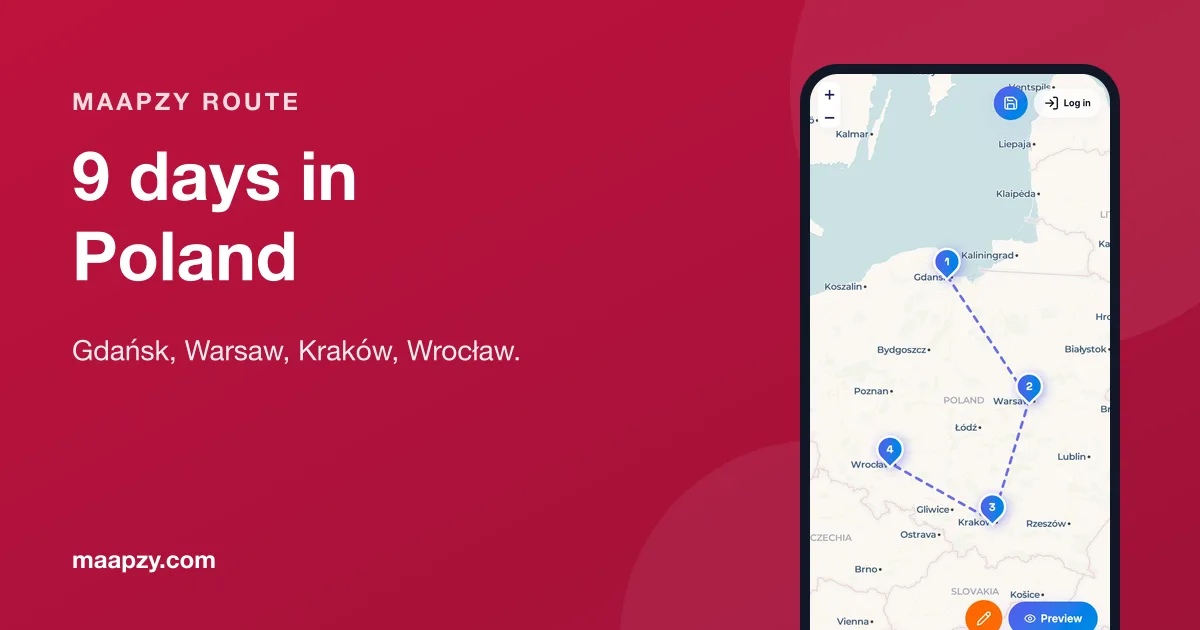
Poland surprises almost everyone. Its cities are beautiful, lively and good value, its history is deeply moving, and its trains are fast and modern. In just over a week you can travel from a Hanseatic port on the Baltic Sea to the medieval heart of Kraków and the island churches of Wrocław.
The route at a glance
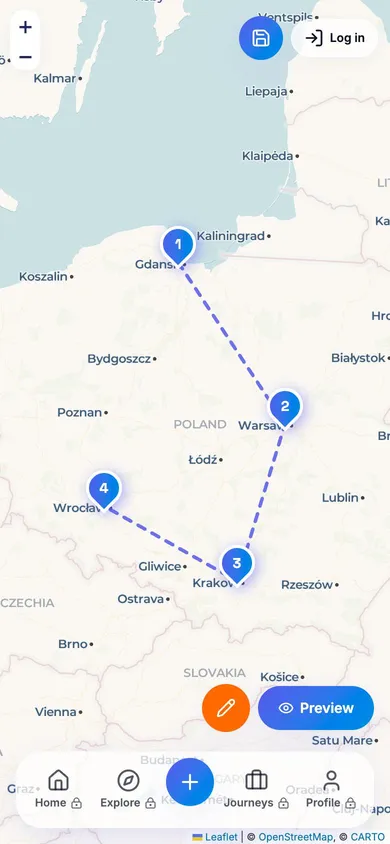
- Days 1–2: Gdańsk — the Long Market, Solidarity and the Baltic coast
- Days 3–4: Warsaw — a rebuilt Old Town and world-class museums
- Days 5–7: Kraków — Wawel, Kazimierz, Wieliczka and Auschwitz
- Days 8–9: Wrocław — a market square, islands and hundreds of dwarfs
Days 1–2: Gdańsk
Gdańsk was a rich trading port for centuries, and its colourful merchants' houses line the Long Market and the riverside. See Neptune's Fountain, climb the tower of St Mary's Church, one of the largest brick churches in the world, and walk the Motława embankment to the medieval crane. The European Solidarity Centre tells the story of the movement that began in the Gdańsk shipyards in 1980 and helped end communism.
On day two, visit Westerplatte, where the Second World War began, or head to the seaside resort of Sopot and its long wooden pier. With an extra day, take the train to Malbork Castle, the largest castle in the world by land area.
Days 3–4: Warsaw
Warsaw's Old Town was almost completely destroyed in 1944 and rebuilt from paintings and photographs; it's now a UNESCO World Heritage site. Visit the POLIN Museum of the History of Polish Jews and the Warsaw Rising Museum, two of the best museums in Europe. Then relax in Łazienki Park, where free Chopin concerts take place by his monument on summer Sundays, and see the city from the viewing terrace of the Palace of Culture and Science.
In the evening, cross the river to Praga, a gritty, creative district with bars in old factories.
Getting there
Fast trains from Gdańsk to Warsaw take about 2 hours 45 minutes.
Days 5–7: Kraków
Kraków escaped major destruction in the war and still has one of the largest medieval squares in Europe. Explore the Main Market Square and Cloth Hall, Wawel Castle and Cathedral, and the old Jewish district of Kazimierz. Our Kraków local spots guide goes neighbourhood by neighbourhood.
Day trips
- Wieliczka Salt Mine: chapels, statues and lakes carved deep underground, about 30 minutes away.
- Auschwitz-Birkenau Memorial: the former Nazi German concentration and extermination camp, about 1.5 hours away. It's a deeply important and emotional visit. Book entry in advance on the official memorial website, and allow a full day.
Getting there
Fast trains from Warsaw to Kraków take about 2 hours 20 minutes.
Days 8–9: Wrocław
Wrocław is a city of rivers and islands, with more than 100 bridges. Its Market Square is one of the most beautiful in Poland, ringed by pastel townhouses and a Gothic town hall. Look for the hundreds of small bronze dwarf statues hidden around the city, and walk to Ostrów Tumski, the cathedral island, at dusk, when a lamplighter still lights the gas lamps by hand. The Racławice Panorama, a huge circular painting, is a unique sight.
Getting there and home
Trains from Kraków to Wrocław take about 3 hours. Wrocław has an airport, and Berlin is about 4 to 5 hours away by train.
Getting around
- PKP Intercity runs the fast trains between all four cities; book Express InterCity Premium seats ahead.
- City transport is cheap and easy, with trams in every city.
- Compare routes for each leg with Maapzy's travel booking.
What to eat
- Pierogi: dumplings filled with potato and cheese, meat, mushrooms or fruit
- Żurek: sour rye soup, often served in a bread bowl
- Obwarzanek: Kraków's ring-shaped bread, sold from street carts
- A milk bar (bar mleczny): cheap canteens serving home-style Polish food
- Pączki: Polish doughnuts, best fresh from a bakery
Budget and when to go
Poland is excellent value. As a rough guide for 2026, budget €70–€110 per person per day for a mid-range trip. May to September is warm and lively, with long days on the Baltic coast. December brings Christmas markets to Kraków and Wrocław. Winters are cold, so pack warm layers.
Coming from Germany? Combine this trip with our Berlin to Prague route.
Poland in 9 days
- Days 1–2: Gdańsk — Long Market, St Mary's tower, Solidarity Centre, Sopot
- Days 3–4: Warsaw — Old Town, POLIN, Warsaw Rising Museum, Łazienki
- Days 5–7: Kraków — Market Square, Wawel, Kazimierz
- Book Auschwitz-Birkenau entry on the official site
- Visit the Wieliczka Salt Mine
- Days 8–9: Wrocław — Market Square, dwarfs, Ostrów Tumski at dusk
- Map the route in the planner
Frequently asked questions
How many days do you need in Poland?
Nine to ten days covers Gdańsk, Warsaw, Kraków and Wrocław at a comfortable pace, including day trips from Kraków.
Do I need to book Auschwitz-Birkenau in advance?
Yes. Entry is by time slot and is often fully booked in busy months. Book on the official Auschwitz-Birkenau Memorial website.
Is Poland expensive to travel in?
No. Food, transport and accommodation are cheaper than in most western European countries.
Is it easy to travel around Poland by train?
Yes. Fast trains connect the major cities in two to three hours, and tickets are reasonably priced.
Sources
Start your next trip on a map.
Pin a few cities and see what a realistic route looks like — in five minutes, for free.
Open the plannerKeep reading
- How to Plan the Camino de Santiago: Routes, Stages, Budget and PackingPlan your Camino de Santiago step by step: choose a route, set your daily stages, get the credential and Compostela, budget for 2026 and pack under 8 kg.
- Camino Francés: Walking 780 km From Saint-Jean-Pied-de-Port to SantiagoA stage-by-stage Camino Francés itinerary from Saint-Jean-Pied-de-Port to Santiago: the Pyrenees, Pamplona, the meseta, León and Galicia in about 5 weeks.
- Walking the Last 100 km of the Camino: Sarria to Santiago in 5 DaysWalk the last 100 km of the Camino Francés from Sarria to Santiago in 5 days: stages, distances, where to sleep, the two-stamp rule and getting to Sarria.