Kraków Like a Local: Market Square, Kazimierz, Podgórze and Beyond
Kraków beyond the Market Square: Kazimierz courtyards and zapiekanki, Podgórze's history, a sunset mound, milk bars and the very best day trips.
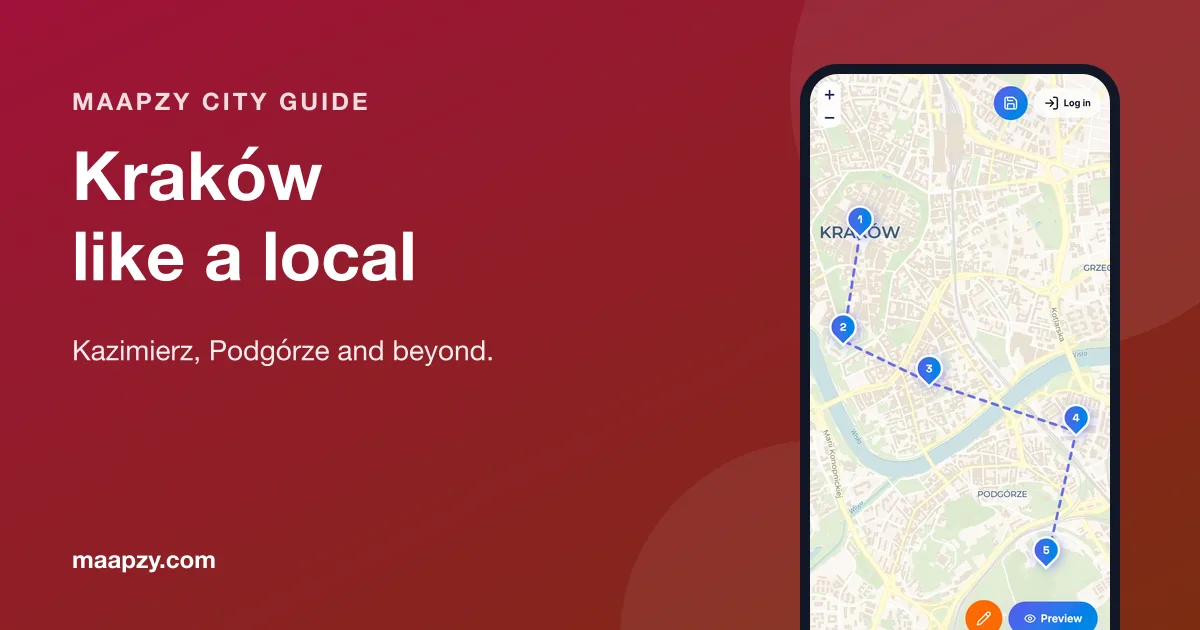
Kraków was Poland's royal capital for centuries and came through the Second World War largely intact. Its old town is a UNESCO World Heritage site, and its student population keeps the cafés and bars full every night of the week. Most visitors stick to the Market Square, but some of the city's best corners are a 15-minute walk away.
Kraków on the map
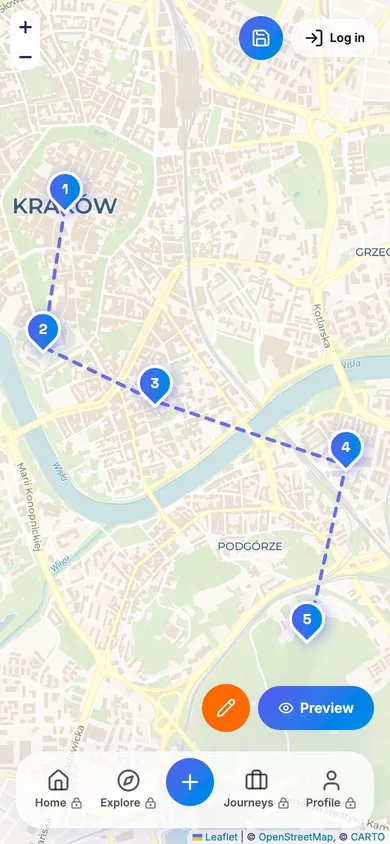
The old town is ringed by the Planty, a park built where the medieval walls once stood. Kazimierz lies just south, and Podgórze across the Vistula. Everything is walkable, and trams cover the longer hops. Buy tickets from machines at stops or on board, and validate them when you get on. A 24- or 48-hour ticket is good value if you plan to ride a lot.
The old town
- 1. Main Market Square (Rynek Główny): one of the largest medieval squares in Europe.
- 2. Cloth Hall: a Renaissance market hall with a gallery of 19th-century Polish art upstairs.
- 3. St Mary's Basilica: listen for the trumpet call (hejnał) played every hour from the tower, cut off mid-note in memory of a legendary trumpeter.
- 4. Rynek Underground: a museum beneath the square showing the medieval town.
- 5. The Barbican and St Florian's Gate: the surviving parts of the old fortifications.
- 6. Planty park: a green ring around the old town, perfect for a walk.
Wawel Hill
Wawel Castle and Cathedral sit on a hill above the river and were the seat of Polish kings. The cathedral holds royal tombs, and you can climb to the Sigismund Bell. The castle has state rooms and treasures; tickets are timed, so book in summer. Below the hill, the Dragon's Den cave and a fire-breathing dragon statue are fun with kids.
Kazimierz: the old Jewish quarter
Kazimierz was for centuries the centre of Jewish life in Kraków. Visit the Old Synagogue and the Remuh Synagogue and cemetery on Szeroka Street, then explore the cafés, galleries and bars that fill its courtyards today.
- 7. Plac Nowy: a round market hall famous for zapiekanki, long open baguettes topped with mushrooms and cheese.
- 8. Szeroka Street: synagogues and Jewish restaurants with live klezmer music some evenings.
- 9. Bars in old courtyards: atmospheric places with mismatched furniture and candlelight.
- 10. Sunday flea market on Plac Nowy.
Podgórze: history across the river
- 11. Oskar Schindler's Enamel Factory: a museum about Kraków under Nazi occupation. Book ahead.
- 12. Ghetto Heroes Square: a memorial of large empty chairs, marking the deportations from the wartime ghetto.
- 13. Father Bernatek footbridge: a pedestrian bridge with acrobat sculptures over the Vistula.
- 14. Krakus Mound: an ancient earth mound with a view over the whole city, best at sunset.
Beyond the centre
- 15. Nowa Huta: a planned socialist-realist district built in the 1950s, with wide avenues and a unique atmosphere.
- 16. The Vistula boulevards: riverside paths with summer bars on boats.
- 17. Kościuszko Mound: another viewpoint, with a small fortress.
A two-day plan
Day 1: start at the Main Market Square early, hear the trumpet call, visit the Rynek Underground, then walk the Planty to Wawel for the cathedral and castle. In the afternoon, cross into Kazimierz for the synagogues, a zapiekanka on Plac Nowy and an evening in its courtyard bars. Day 2: cross the Father Bernatek footbridge to Podgórze for Schindler's Factory and Ghetto Heroes Square, have lunch in a milk bar, then climb Krakus Mound for sunset. If you have a third day, use it for Wieliczka or Auschwitz-Birkenau, and book both well ahead.
Where and what to eat
- 18. A milk bar (bar mleczny): cheap, cafeteria-style Polish home cooking.
- 19. Pierogi: try ruskie (potato and cheese), meat or seasonal fruit fillings.
- 20. Obwarzanek: Kraków's ring-shaped bread, sold from blue carts across the city.
- 21. Żurek: sour rye soup, sometimes served in a bread bowl.
- 22. Vodka tasting: try flavoured varieties in a small bar.
Day trips
- 23. Wieliczka Salt Mine: underground chapels carved from salt, about 30 minutes away.
- 24. Auschwitz-Birkenau Memorial: about 1.5 hours away. Book entry on the official memorial site and allow a full day.
- 25. Zakopane and the Tatra Mountains: about 2 to 2.5 hours south, for hiking and mountain views.
Kraków is the heart of our 9-day Poland itinerary. Coming from Prague? See our Prague guide for the previous stop.
Kraków local-spots checklist
- Hear the hejnał trumpet from St Mary's tower
- Book a Wawel Castle time slot
- Eat a zapiekanka on Plac Nowy in Kazimierz
- Visit Schindler's Factory in Podgórze (book)
- Watch sunset from Krakus Mound
- Have lunch in a milk bar
- Book Auschwitz-Birkenau and Wieliczka in advance
- Save your favourite spots in recommendations
Frequently asked questions
How many days do you need in Kraków?
Three days: two for the city and one for a day trip. Add another day to visit both Wieliczka and Auschwitz-Birkenau.
What is Kazimierz?
Kraków's historic Jewish quarter, now a lively district of synagogues, cafés, bars and galleries just south of the old town.
Do I need to book Schindler's Factory?
It's strongly recommended, especially in summer. Tickets are timed and often sell out.
Is Kraków cheap?
Yes. Food, drinks and accommodation are good value compared with most European cities.
Sources
Start your next trip on a map.
Pin a few cities and see what a realistic route looks like — in five minutes, for free.
Open the plannerKeep reading
- Copenhagen Like a Local: Bikes, Harbour Baths, Street Food and HyggeCopenhagen beyond Nyhavn: swim in the harbour, cycle like a Dane, eat at a waterfront street-food market, explore Nørrebro and ski on a power plant.
- Things to Do in Edinburgh: Castles, Volcanoes and Hidden VillagesThe best things to do in Edinburgh: the castle and Royal Mile, a hike up Arthur's Seat, sunset on Calton Hill, Dean Village, Stockbridge and Leith.
- Things to Do in Kyoto: Temples, Gardens and How to Beat the CrowdsThe best things to do in Kyoto and when to go: Fushimi Inari at dawn, Kiyomizu-dera, Gion's evening streets, the bamboo grove and quieter temples.