12 Days in Japan: Tokyo, Hakone, Kyoto, Nara, Osaka and Hiroshima
A 12-day Japan itinerary for first-timers: Tokyo, a hot-spring night in Hakone, Kyoto's temples, Nara's deer, Osaka's food and Hiroshima with Miyajima.
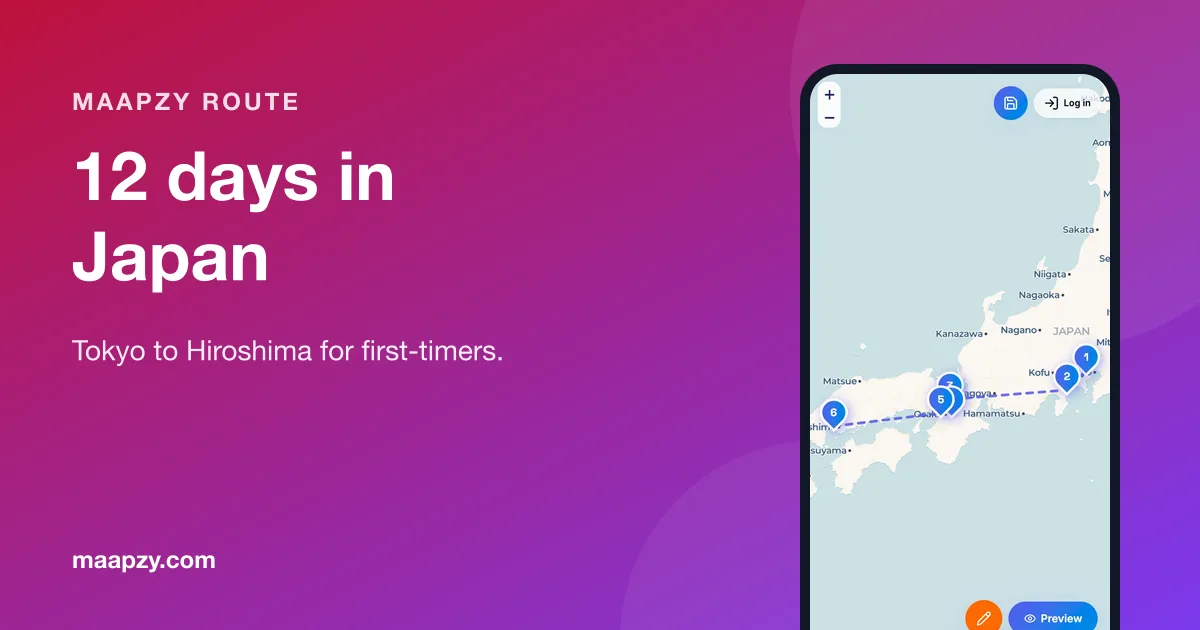
Japan is one of the most rewarding countries to visit: ultra-modern cities, ancient temples, incredible food and a train system that runs to the minute. This route is the classic first-time trip, moving west along the shinkansen line from Tokyo to Hiroshima.
The route at a glance
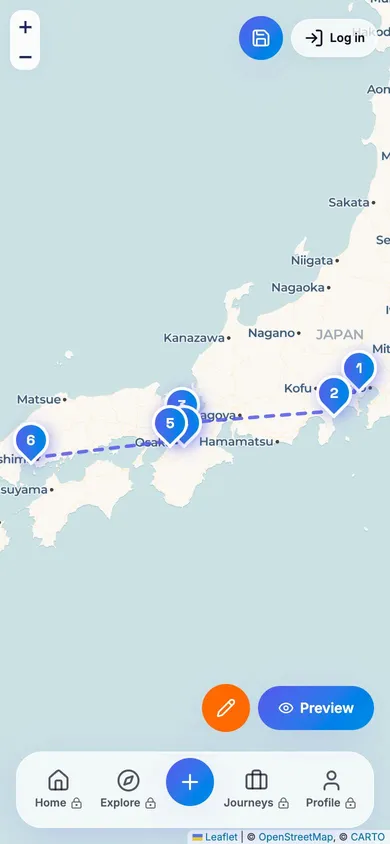
- Days 1–4: Tokyo — neighbourhoods, shrines, markets and city views
- Day 5: Hakone — a ryokan, hot springs and Mount Fuji views
- Days 6–9: Kyoto — temples, gardens and old streets, plus Nara
- Day 10: Osaka — street food and a castle
- Days 11–12: Hiroshima and Miyajima — peace memorials and a floating gate
Days 1–4: Tokyo
Tokyo is a collection of very different neighbourhoods. Cross the Shibuya Scramble, visit the Meiji Jingu shrine in its forest, and see Senso-ji temple in Asakusa early in the morning. Eat your way through the Tsukiji outer market, explore the tiny bars of Golden Gai and Omoide Yokocho in Shinjuku, and stroll the old streets of Yanaka. For views, go up the Tokyo Metropolitan Government Building (free) or Shibuya Sky.
Day 5: Hakone
The Odakyu Romancecar takes about 1 hour 25 minutes from Shinjuku to Hakone, a mountain area famous for hot springs. Take the scenic loop by mountain train, cable car and ropeway, past the volcanic valley of Owakudani, then cruise across Lake Ashi. On clear days, Mount Fuji appears above the lake. Spend the night in a ryokan, a traditional inn with tatami rooms, a kaiseki dinner and a hot-spring bath.
Days 6–9: Kyoto and Nara
From Odawara, near Hakone, the shinkansen reaches Kyoto in about 2 hours. Kyoto was Japan's capital for over a thousand years and has hundreds of temples and shrines. Walk through the thousands of red gates at Fushimi Inari at dawn, visit Kiyomizu-dera and the old streets around it, see the Golden Pavilion and walk the bamboo grove at Arashiyama. Our Kyoto guide explains how to avoid the crowds.
On one day, take the train to Nara (about 45 minutes), where friendly deer roam the park around Todai-ji temple and its giant bronze Buddha.
Day 10: Osaka
Osaka is about 15 minutes from Kyoto by shinkansen or 30 to 45 minutes by local train. It's Japan's kitchen: eat takoyaki (octopus balls) and okonomiyaki (savoury pancakes) along the neon-lit Dotonbori canal, visit Osaka Castle and explore the retro Shinsekai district.
Days 11–12: Hiroshima and Miyajima
The shinkansen from Osaka to Hiroshima takes about 1 hour 20 minutes. Visit the Peace Memorial Park and Museum, which tell the story of the 1945 atomic bombing with great dignity. Then take the train and ferry to Miyajima, where the torii gate of Itsukushima Shrine appears to float on the water at high tide. Fly home from Hiroshima, Osaka or back via Tokyo.
Trains, passes and luggage
- IC cards: load a Suica or ICOCA card (or add one to your phone) for local trains, buses and convenience stores.
- JR Pass: prices rose significantly in 2023. For this route, individual shinkansen tickets may be cheaper, so compare before buying.
- Luggage forwarding: send big suitcases between hotels with a delivery service and travel light on the train.
- Seat reservations: book reserved seats in busy seasons, especially cherry blossom time and holidays.
When to go
Spring (late March to early April) brings cherry blossoms and big crowds. Autumn (November) brings red maple leaves and pleasant weather. Summer is hot, humid and rainy in June. Winter is cold but clear, with fewer visitors outside the New Year holiday.
Budget and etiquette
As a rough guide for 2026, budget ¥18,000–¥30,000 per person per day for a mid-range trip, more for a ryokan night. Tipping isn't expected. Remove your shoes where you see a step up or slippers, keep your voice down on trains, and carry a small bag for your rubbish, as public bins are rare.
Save restaurants, temples and shops you discover as recommendations so they're on your map for next time, and see our best travel apps of 2026 for other useful tools.
Japan in 12 days
- Days 1–4: Tokyo — Shibuya, Meiji Jingu, Asakusa early, Tsukiji outer market, Shinjuku bars
- Day 5: Romancecar to Hakone, ryokan night with hot-spring bath
- Days 6–9: Kyoto — Fushimi Inari at dawn, Kiyomizu-dera, Arashiyama; day trip to Nara
- Day 10: Osaka — Dotonbori street food, Osaka Castle
- Days 11–12: Hiroshima Peace Memorial, Miyajima
- Get an IC card and compare a JR Pass with single tickets
- Forward big luggage between hotels
Frequently asked questions
Is the JR Pass worth it for this itinerary?
Not always since the 2023 price rise. Add up the individual shinkansen fares for your route and compare them with the pass before you buy.
How many days do you need in Japan for a first trip?
Ten to fourteen days covers Tokyo, Hakone, Kyoto, Nara, Osaka and Hiroshima at a comfortable pace.
When is the best time to visit Japan?
Spring for cherry blossoms and autumn for red leaves are the most beautiful, though also the busiest. November is a good balance.
Do I need cash in Japan?
Less than before, but carry some for small shops, temples and rural areas. IC cards and credit cards are widely accepted in cities.
Sources
Start your next trip on a map.
Pin a few cities and see what a realistic route looks like — in five minutes, for free.
Open the plannerKeep reading
- How to Plan the Camino de Santiago: Routes, Stages, Budget and PackingPlan your Camino de Santiago step by step: choose a route, set your daily stages, get the credential and Compostela, budget for 2026 and pack under 8 kg.
- Camino Francés: Walking 780 km From Saint-Jean-Pied-de-Port to SantiagoA stage-by-stage Camino Francés itinerary from Saint-Jean-Pied-de-Port to Santiago: the Pyrenees, Pamplona, the meseta, León and Galicia in about 5 weeks.
- Walking the Last 100 km of the Camino: Sarria to Santiago in 5 DaysWalk the last 100 km of the Camino Francés from Sarria to Santiago in 5 days: stages, distances, where to sleep, the two-stamp rule and getting to Sarria.