7 Days in Switzerland by Train: Zurich, Lucerne, Interlaken, Lauterbrunnen and Bern
A 7-day Switzerland itinerary by train from Zurich to Lucerne, Interlaken, the Lauterbrunnen valley and Bern, with passes, mountain trips and budget tips.
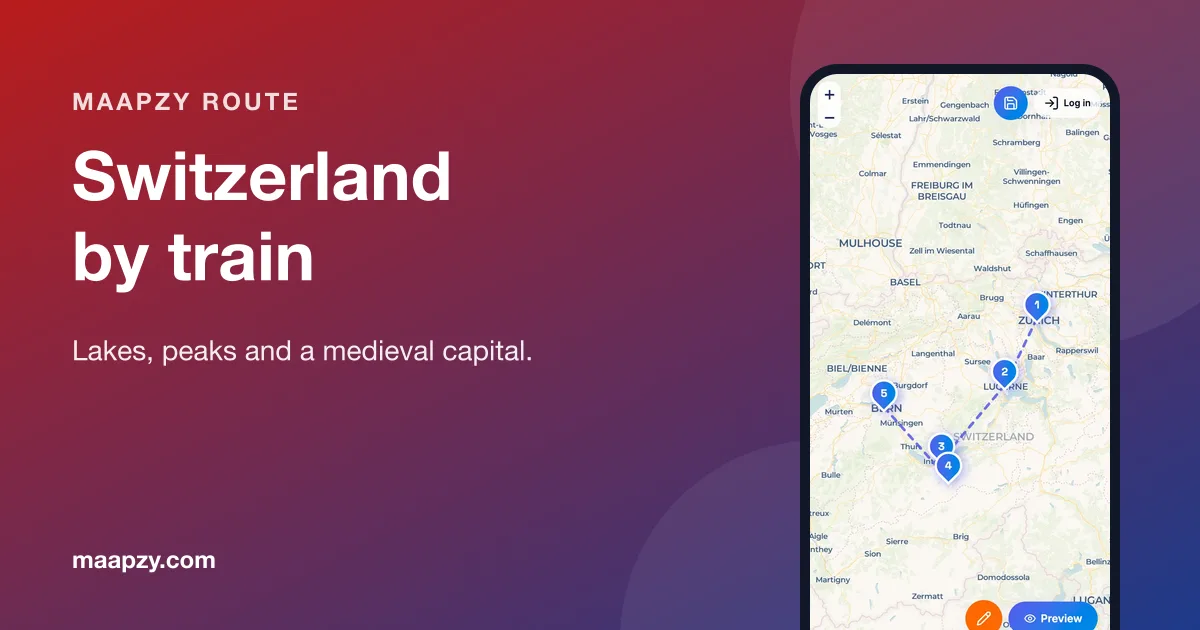
Switzerland's trains run on time, connect with boats and cable cars, and pass some of the most beautiful scenery on earth. This route uses that network to move from lakes to high mountains and back to a medieval capital, without ever needing a car.
The route at a glance
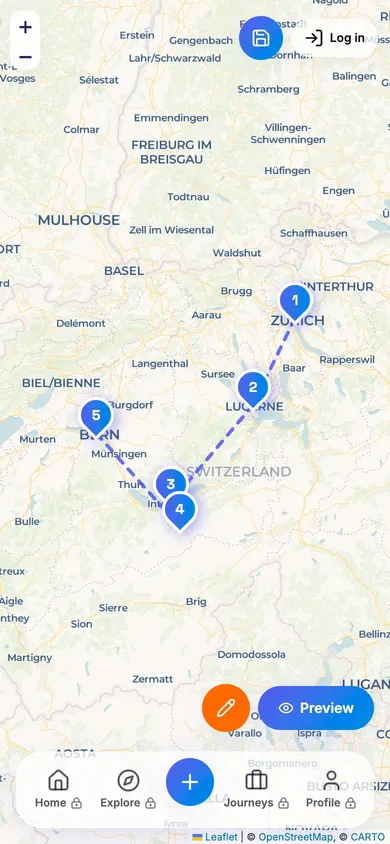
- Day 1: Zurich — the old town and the lake
- Days 2–3: Lucerne — the Chapel Bridge and a mountain day
- Days 4–6: Interlaken and Lauterbrunnen — waterfalls, car-free villages and high peaks
- Day 7: Bern — arcaded streets and a bear park
Day 1: Zurich
Walk the old town on both sides of the Limmat river, climb to the Lindenhof for the view, and see the Chagall windows in the Fraumünster church. In summer, swim in the lake or the river at one of the traditional bathing houses. Zurich airport is about 10 minutes from the main station by train.
Days 2–3: Lucerne
Lucerne sits on a lake surrounded by mountains. Cross the wooden Chapel Bridge, first built in the 14th century, see the Lion Monument carved into a rock face, and stroll the lakeside promenade.
For your mountain day, choose Mount Pilatus, reached by the world's steepest cogwheel railway in summer, or Mount Rigi, the 'queen of the mountains', with gentle walks and views over several lakes. A lake boat is part of the journey to both.
Getting there
Zurich to Lucerne takes about 45 minutes by train.
Days 4–6: Interlaken and the Lauterbrunnen valley
The Luzern–Interlaken Express crosses the Brünig Pass past turquoise lakes in about two hours; it's one of the prettiest rides in the country. Interlaken sits between Lake Thun and Lake Brienz and is the gateway to the Jungfrau region.
Base yourself in Lauterbrunnen, a valley with dozens of waterfalls, about 20 minutes from Interlaken. From there:
- Visit Mürren and Gimmelwald: car-free villages on a cliff edge, reached by cable car and mountain train.
- See Trümmelbach Falls: glacier water thundering through a mountain, accessible by an underground lift.
- Go to the top: the Jungfraujoch, at 3,454 metres, is the highest railway station in Europe. Or ride up the Schilthorn for a 360-degree view.
- Hike: easy valley walks to Staubbach Falls or longer trails such as the one from Männlichen to Kleine Scheidegg.
Mountain tips
Check the live webcams before going up. If the peaks are in cloud, save your mountain trip for a clearer day, and dress in layers even in summer.
Day 7: Bern
Bern's old town is a UNESCO World Heritage site, with about 6 kilometres of covered arcades. Watch the Zytglogge clock tower's mechanical figures on the hour, visit the bear park by the river and, in summer, join locals floating down the fast, clear Aare river. It's a relaxed final day before heading back to Zurich.
Getting there and home
Interlaken to Bern takes about 50 minutes, and Bern to Zurich about an hour.
Swiss Travel Pass or Half Fare Card?
The Swiss Travel Pass covers most trains, buses and boats and gives discounts on many mountain railways. The Half Fare Card halves most fares for a month. Which is cheaper depends on how much you travel and how many mountain trips you take, so price your route on the SBB website before deciding.
Budget and when to go
Switzerland is one of the most expensive countries in Europe. As a rough guide for 2026, budget CHF 220–320 per person per day for a mid-range trip including transport. Save money with supermarket picnics (Coop and Migros) and by staying in apartments. June to September is best for hiking; December to March for snow. Some mountain lifts close for maintenance in spring and late autumn. Book popular mountain trains, such as the Jungfraujoch, a day or two ahead in summer, once you know the weather.
Continuing east? Innsbruck is about 3.5 hours from Zurich by train; see our Austria itinerary. Heading south? Milan is about 3.5 hours away, connecting with our northern Italy route.
Switzerland in 7 days
- Day 1: Zurich old town, Lindenhof, Fraumünster
- Days 2–3: Lucerne, Chapel Bridge, Pilatus or Rigi
- Day 4: Luzern–Interlaken Express to the Jungfrau region
- Days 4–6: Lauterbrunnen, Mürren, Trümmelbach, Jungfraujoch or Schilthorn
- Check mountain webcams before going up
- Day 7: Bern's arcades, Zytglogge, bear park
- Compare the Swiss Travel Pass and the Half Fare Card
- Map it in the planner
Frequently asked questions
Is the Swiss Travel Pass worth it?
It depends on how much you travel. For a busy week with long train rides and mountain trips it often pays off; for fewer journeys, the Half Fare Card can be cheaper. Price your route on the SBB website first.
Where should I stay in the Jungfrau region?
Lauterbrunnen or Wengen for valley and mountain access, Interlaken for more hotels and restaurants, or Mürren for a quiet, car-free stay with big views.
How expensive is Switzerland?
Very. Expect high prices for hotels, meals and mountain railways. Picnics from supermarkets and apartments with kitchens help keep costs down.
What is the best time to visit Switzerland?
June to September for hiking and lakes, December to March for skiing and snow. Spring and late autumn are quieter, but some lifts close.
Sources
Start your next trip on a map.
Pin a few cities and see what a realistic route looks like — in five minutes, for free.
Open the plannerKeep reading
- How to Plan the Camino de Santiago: Routes, Stages, Budget and PackingPlan your Camino de Santiago step by step: choose a route, set your daily stages, get the credential and Compostela, budget for 2026 and pack under 8 kg.
- Camino Francés: Walking 780 km From Saint-Jean-Pied-de-Port to SantiagoA stage-by-stage Camino Francés itinerary from Saint-Jean-Pied-de-Port to Santiago: the Pyrenees, Pamplona, the meseta, León and Galicia in about 5 weeks.
- Walking the Last 100 km of the Camino: Sarria to Santiago in 5 DaysWalk the last 100 km of the Camino Francés from Sarria to Santiago in 5 days: stages, distances, where to sleep, the two-stamp rule and getting to Sarria.