Seville Like a Local: 25 Spots from Triana to the Alameda
Seville beyond the cathedral: Triana's tile workshops, Europe's oldest tapas bars, a mushroom-shaped rooftop, quiet palaces and real flamenco.
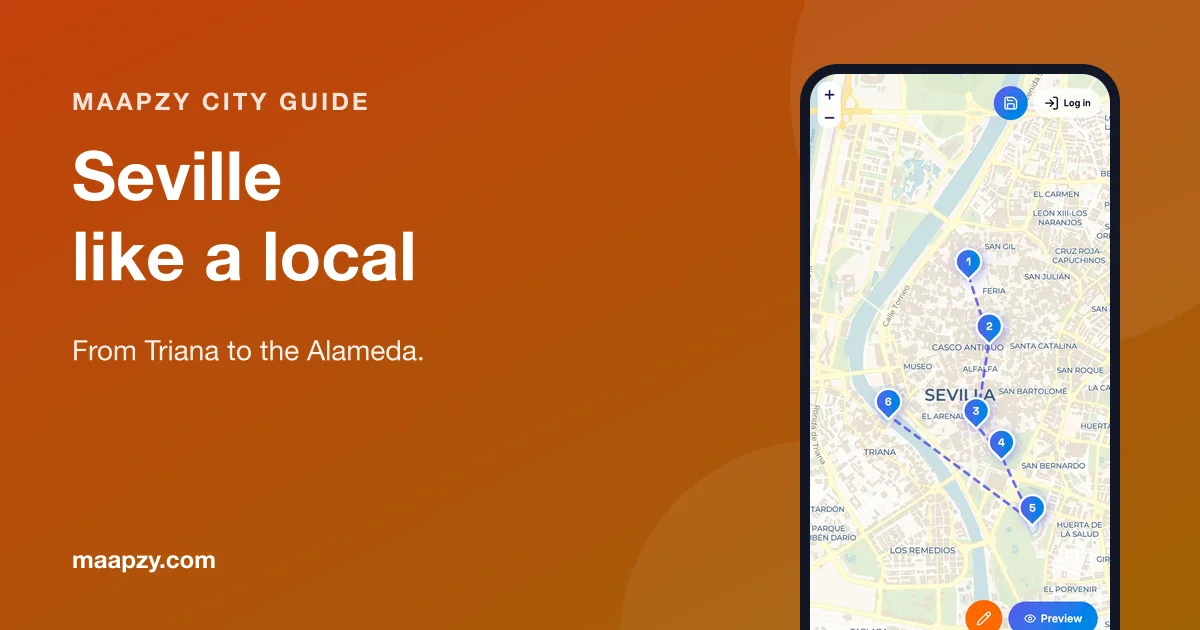
Seville is a city to slow down in. Orange trees line the streets, people eat dinner at 10pm and the light turns everything gold in the late afternoon. The big sights are unmissable, but the best moments happen in a tiled courtyard, a standing-room tapas bar or a flamenco club where nobody is performing for tourists.
Seville by area
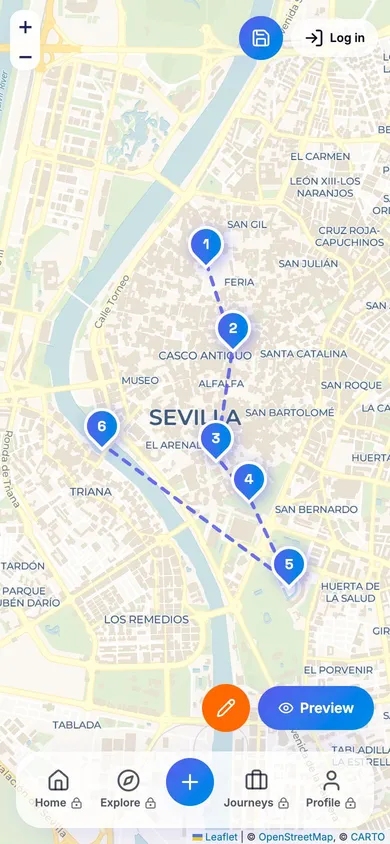
The historic centre is compact and mostly flat, so walking is easy. Split your time into the cathedral area, the north around the Alameda, the south around the Plaza de España and Triana across the river.
The centre: cathedral, Alcázar and Santa Cruz
- 1. Real Alcázar: a palace of courtyards, tiles and gardens. Book a time slot and give it two hours.
- 2. Cathedral and Giralda: one of the largest Gothic cathedrals in the world. The Giralda tower has ramps instead of stairs.
- 3. Barrio Santa Cruz: the old Jewish quarter. Look for the tiny Plaza de Doña Elvira and the Callejón del Agua.
- 4. Archivo de Indias: historic records of Spain's empire in a grand building, free to enter.
- 5. Hospital de los Venerables: a baroque gem with paintings by Velázquez and Murillo.
- 6. Casa de Pilatos: a smaller, quieter palace mixing Moorish, Gothic and Renaissance styles.
North: Las Setas, markets and the Alameda
- 7. Metropol Parasol (Las Setas): a giant wooden canopy with a rooftop walkway; go for sunset.
- 8. El Rinconcillo: often called Seville's oldest bar, dating to 1670. Order espinacas con garbanzos.
- 9. Palacio de las Dueñas: a beautiful palace with gardens, long home to the Dukes of Alba.
- 10. El Jueves market: a flea market on Calle Feria every Thursday morning, one of the oldest in the city.
- 11. Mercado de Feria: a neighbourhood food market with small bars inside.
- 12. Alameda de Hércules: a long square full of bars and terraces, busy late into the night.
South: Plaza de España and the river
- 13. Plaza de España: a huge semicircular building with tiled alcoves for every Spanish province.
- 14. Parque de María Luisa: shaded paths, fountains and pavilions next door.
- 15. Torre del Oro: a 13th-century watchtower on the river with a small maritime museum.
- 16. A kayak or boat trip on the Guadalquivir at sunset.
Triana: ceramics, tapas and flamenco roots
- 17. Mercado de Triana: a food market built over the ruins of a castle once used by the Inquisition.
- 18. Calle Alfarería: streets of ceramics shops and the Centro Cerámica Triana museum.
- 19. Calle Betis: riverside bars with views back to the Torre del Oro.
- 20. The Capillita del Carmen: the little chapel at the end of the Triana bridge.
- 21. Flamenco in Triana: the neighbourhood is one of flamenco's birthplaces. Look for small peñas and bars with live music.
Food and drink to try
- 22. Salmorejo: a thick, cold tomato soup topped with ham and egg.
- 23. Montaditos and pringá: small sandwiches, the latter filled with slow-cooked meats.
- 24. Fino or manzanilla sherry with olives and almonds.
- 25. Vino de naranja: a sweet orange wine from the province, perfect after dinner.
Seeing real flamenco
Tourist shows can be excellent, but intimate venues are more moving. Small flamenco houses such as Casa de la Memoria offer seated performances in historic courtyards; book ahead. The Museo del Baile Flamenco explains the art and hosts shows. For a looser experience, ask in Triana bars about nights with live music.
When to visit and how to beat the heat
Spring is Seville's best season, with orange blossom in the air and the Semana Santa processions and April Fair. Autumn is also lovely. In July and August, temperatures often pass 40°C. Do sightseeing early, rest in the afternoon like locals do, and go out again after 8pm, when the streets come back to life.
Day trips and next stops
Córdoba is 45 minutes away by fast train and Granada about 2.5 hours. Both are part of our 7-day Andalusia itinerary. For the Alhambra and cave flamenco, see our Granada guide. Closer to Seville, Carmona and the coastal city of Cádiz make great day trips.
Seville local-spots checklist
- Book the Real Alcázar and the cathedral online
- Get lost in Santa Cruz in the morning
- Order espinacas con garbanzos at El Rinconcillo
- Walk the Las Setas rooftop at sunset
- Cross to Triana for ceramics and tapas
- See flamenco in an intimate venue
- Save your favourite bars in recommendations
Frequently asked questions
How many days do you need in Seville?
Two to three days covers the main sights and a couple of neighbourhoods. Add a day for a trip to Córdoba or Cádiz.
What is the best area to stay in Seville?
Santa Cruz and El Arenal are central and atmospheric. The Alameda is livelier at night, and Triana is great for a local feel.
Where can I see authentic flamenco in Seville?
Look for small flamenco houses with seated shows, the Museo del Baile Flamenco, and bars in Triana with live music nights.
Is Seville too hot in summer?
July and August often exceed 40°C. If you go, sightsee early in the morning and late in the evening, and rest in the afternoon.
Sources
Start your next trip on a map.
Pin a few cities and see what a realistic route looks like — in five minutes, for free.
Open the plannerKeep reading
- Copenhagen Like a Local: Bikes, Harbour Baths, Street Food and HyggeCopenhagen beyond Nyhavn: swim in the harbour, cycle like a Dane, eat at a waterfront street-food market, explore Nørrebro and ski on a power plant.
- Things to Do in Edinburgh: Castles, Volcanoes and Hidden VillagesThe best things to do in Edinburgh: the castle and Royal Mile, a hike up Arthur's Seat, sunset on Calton Hill, Dean Village, Stockbridge and Leith.
- Things to Do in Kyoto: Temples, Gardens and How to Beat the CrowdsThe best things to do in Kyoto and when to go: Fushimi Inari at dawn, Kiyomizu-dera, Gion's evening streets, the bamboo grove and quieter temples.