Naples Like a Local: Pizza, Underground Tunnels and the Best Views
Naples beyond the clichés: old-town streets, a veiled marble Christ, underground Greek tunnels, the best pizza, a funicular to the views and the seafront.

Naples is intense, noisy, beautiful and full of life. Its historic centre is one of the largest in Europe and a UNESCO World Heritage site. It's the birthplace of pizza, home to some of the world's great museums and the gateway to Pompeii, Capri and the Amalfi Coast. Give it two days, and it will win you over.
Naples on the map
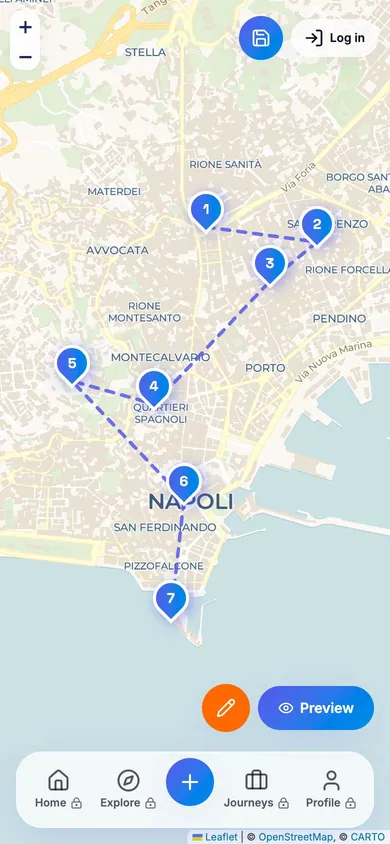
The historic centre is walkable, but distances add up. Use the metro (several stations are art installations), funiculars to climb to Vomero and buses along the seafront. Keep valuables out of sight, as in any big city, and wear comfortable shoes for the steep, cobbled streets and long museum visits.
The historic centre (Centro Storico)
- 1. Spaccanapoli: the long, straight street that cuts the old town in half.
- 2. Via San Gregorio Armeno: the street of nativity-scene makers, busy all year.
- 3. Sansevero Chapel: home to the astonishing marble Veiled Christ. Book ahead.
- 4. Naples Cathedral: the chapel of San Gennaro, the city's patron saint.
- 5. Napoli Sotterranea: guided tours through Greek and Roman tunnels and cisterns beneath the city.
- 6. Santa Chiara cloister: a peaceful garden with majolica-tiled columns and benches.
The National Archaeological Museum
This is one of the most important archaeological museums in the world, holding many of the best mosaics, frescoes and sculptures from Pompeii and Herculaneum, including the huge Alexander Mosaic. Visit before or after Pompeii to make sense of what you see there.
Quartieri Spagnoli
The Spanish Quarter is a grid of narrow streets with washing lines overhead, tiny shrines and street food stalls. It's home to a famous mural of footballer Diego Maradona, now a pilgrimage site for fans. It's lively and safe in the daytime; walk with normal city awareness.
Vomero and Castel Sant'Elmo
Take one of the funiculars up to Vomero, a calmer residential district on the hill. Castel Sant'Elmo, a star-shaped fortress, has the best panorama of the city, the bay and Mount Vesuvius. Next door, the Certosa di San Martino is a former monastery with a museum and gardens.
The seafront and the royal quarter
- 7. Piazza del Plebiscito: a vast square between the Royal Palace and a domed church.
- 8. Galleria Umberto I: a 19th-century glass-roofed shopping arcade.
- 9. Teatro di San Carlo: one of the oldest working opera houses in the world.
- 10. Castel dell'Ovo: a seaside castle with free views across the bay.
- 11. The Lungomare: a seafront promenade for a sunset walk.
- 12. Toledo metro station: an underground art station designed to feel like you're under the sea.
Pizza and street food
- 13. Pizza margherita: at a classic pizzeria such as L'Antica Pizzeria da Michele or Sorbillo. Expect queues; they move quickly.
- 14. Pizza fritta: deep-fried pizza, a local favourite.
- 15. Cuoppo: a paper cone of fried seafood or vegetables.
- 16. Sfogliatella: a shell-shaped flaky pastry with ricotta filling.
- 17. Babà: a rum-soaked sponge cake.
- 18. Espresso: strong, quick and drunk standing at the bar. Look out for the caffè sospeso, a coffee paid forward for a stranger.
A two-day plan
Day 1: the National Archaeological Museum at opening, then Spaccanapoli, the Sansevero Chapel and San Gregorio Armeno, with pizza for lunch. In the afternoon, go underground with Napoli Sotterranea. Day 2: the funicular up to Castel Sant'Elmo and the Certosa di San Martino, down through the Quartieri Spagnoli, then Piazza del Plebiscito, the Galleria and a sunset walk along the seafront to Castel dell'Ovo. Finish with a babà and an espresso.
Beyond the centre
- 19. Capodimonte: a royal palace museum with Caravaggio and a huge park.
- 20. Catacombs of San Gennaro: early Christian catacombs in the Sanità district.
- 21. Mount Vesuvius: hike to the crater rim on a short trail.
- 22. Herculaneum: a smaller, better-preserved alternative to Pompeii.
- 23. Procida: a colourful island an hour away by ferry.
- 24. Posillipo: a coastal road with villas and swimming spots.
- 25. Football: if you can, catch a match or simply feel the city's passion for its team.
Naples is the first stop on our Naples to the Amalfi Coast itinerary. For more southern Italy, see our Sicily road trip.
Naples like a local
- Walk Spaccanapoli and Via San Gregorio Armeno
- Book the Sansevero Chapel for the Veiled Christ
- Go underground with Napoli Sotterranea
- Spend a morning at the National Archaeological Museum
- Eat a margherita at a classic pizzeria
- Ride a funicular to Castel Sant'Elmo for the view
- Sunset on the Lungomare by Castel dell'Ovo
- Save your favourite pizzerias in recommendations
Frequently asked questions
Is Naples safe to visit?
Yes, with normal big-city awareness. Watch for pickpockets in crowded places and on public transport, and keep phones and bags secure.
Where is the best pizza in Naples?
Classic pizzerias such as L'Antica Pizzeria da Michele and Sorbillo are famous, but many neighbourhood pizzerias are just as good and less crowded.
How many days do you need in Naples?
Two days covers the historic centre, the Archaeological Museum and the seafront. Add days for Pompeii, Herculaneum or the islands.
What is the Veiled Christ?
An 18th-century marble sculpture by Giuseppe Sanmartino in the Sansevero Chapel, famous for the transparent-looking veil carved in stone.
Sources
Start your next trip on a map.
Pin a few cities and see what a realistic route looks like — in five minutes, for free.
Open the plannerKeep reading
- Copenhagen Like a Local: Bikes, Harbour Baths, Street Food and HyggeCopenhagen beyond Nyhavn: swim in the harbour, cycle like a Dane, eat at a waterfront street-food market, explore Nørrebro and ski on a power plant.
- Things to Do in Edinburgh: Castles, Volcanoes and Hidden VillagesThe best things to do in Edinburgh: the castle and Royal Mile, a hike up Arthur's Seat, sunset on Calton Hill, Dean Village, Stockbridge and Leith.
- Things to Do in Kyoto: Temples, Gardens and How to Beat the CrowdsThe best things to do in Kyoto and when to go: Fushimi Inari at dawn, Kiyomizu-dera, Gion's evening streets, the bamboo grove and quieter temples.