Camino del Norte: Walking Spain's Northern Coast From Irun to Santiago
A Camino del Norte itinerary from Irun to Santiago along Spain's green northern coast: San Sebastián, Bilbao, Santander, Asturias and Galicia in 5 weeks.
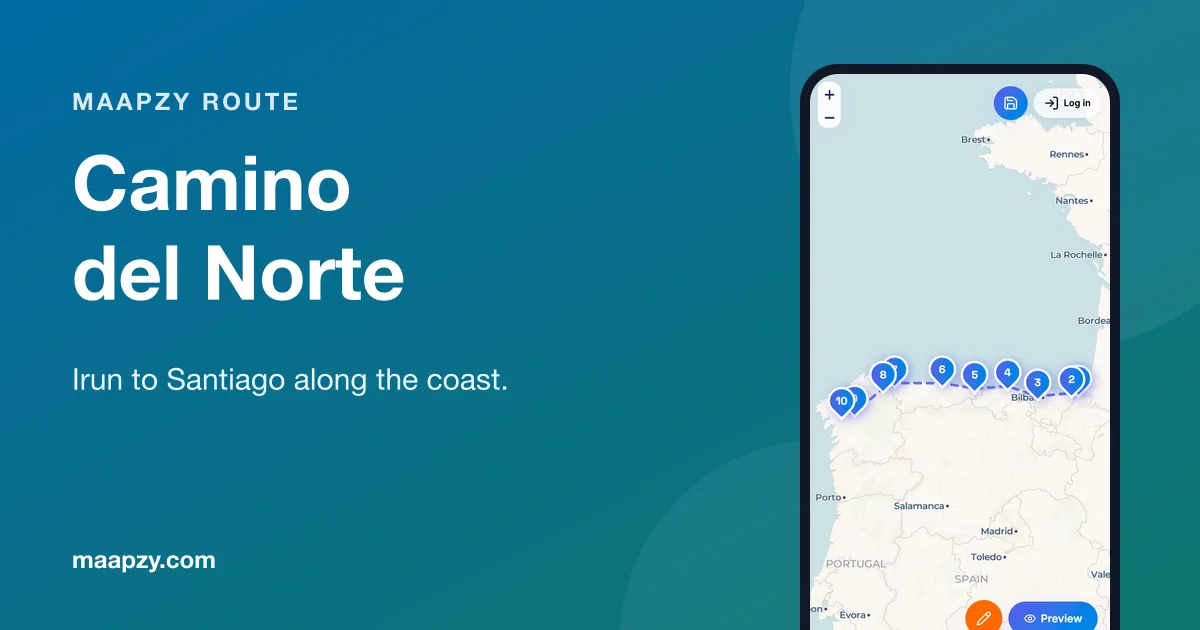
If the Camino Francés is the busy main road, the Camino del Norte is the scenic coastal route. You walk past surf beaches, fishing harbours and green hills that drop straight into the sea, and through three of Spain's best food regions. The trade-off is more climbing, fewer albergues and higher summer prices. It's a great second Camino, or a first one if you're a confident hiker.
The route at a glance
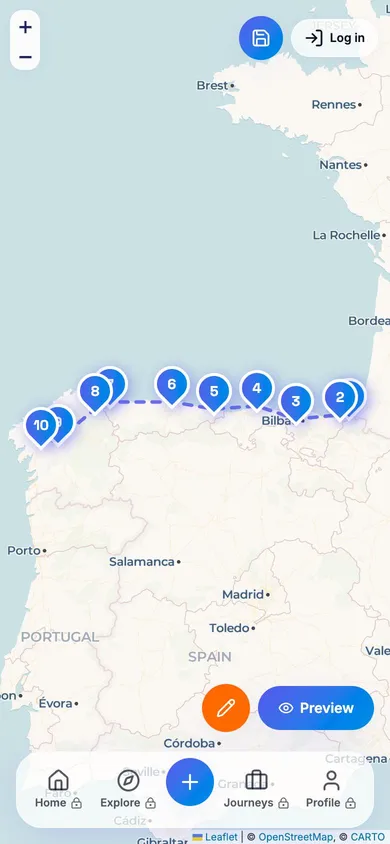
- Days 1–7: Irun to Bilbao — the Basque coast (about 150 km)
- Days 8–12: Bilbao to Santander — into Cantabria (about 110 km)
- Days 13–23: Santander to Ribadeo — Cantabria and Asturias (about 300 km)
- Days 24–33: Ribadeo to Santiago — inland through Galicia (about 200 km)
Is the Norte right for you?
- Choose it if you like the sea, quieter paths and great food, and don't mind daily ups and downs.
- Think twice if it's your first long-distance walk, or you need a bed in every village; gaps between albergues can be 20–30 km.
- Budget a bit more for coastal towns in July and August, when beach holidaymakers fill hotels.
Days 1–7: Irun to Bilbao
Start in Irun, on the border with France, and climb over Mount Jaizkibel to the fishing village of Pasai Donibane, crossing the harbour by small ferry. The first night is in San Sebastián, so arrive early enough for pintxos in the old town. Our Basque Country itinerary has more ideas for the city.
The next days follow cliffs and beaches via Zarautz, Getaria and Deba, then head inland over steep hills to Markina and Gernika, a town remembered for its bombing in 1937 and for its Basque oak tree. You arrive in Bilbao along the river past the Guggenheim Museum.
Days 8–12: Bilbao to Santander
Leaving Bilbao, many pilgrims cross the river at Portugalete on the Vizcaya Bridge, a hanging transporter bridge and UNESCO World Heritage Site. The path enters Cantabria at Castro Urdiales and follows long sandy beaches. At Laredo, a small ferry crosses the bay to Santoña, and two days later another ferry takes you from Somo across to Santander.
Days 13–23: Cantabria and Asturias
Highlights include the medieval village of Santillana del Mar, Comillas with Gaudí's colourful El Capricho, and the fishing port of San Vicente de la Barquera. In Asturias, the path passes Llanes and Ribadesella with the Picos de Europa behind them. Try sidra, local cider poured from a height to give it bubbles, and fabada, a rich bean and pork stew that will refuel you for the next day's hills. Some of the most beautiful stretches here run along clifftop paths between small coves, so allow time to stop and swim.
Near Villaviciosa, the Camino Primitivo branches off south to Oviedo. Stay on the coast for Gijón and Avilés, then continue west through fishing towns such as Luarca to Ribadeo, where a long bridge takes you into Galicia.
Days 24–33: Inland through Galicia
At Ribadeo the route turns away from the sea and heads inland through quiet green hills to Mondoñedo, with its cathedral, then Vilalba and Baamonde. Many pilgrims stay at the monastery albergue in Sobrado dos Monxes. At Arzúa the Norte joins the Camino Francés for the last two days, and the path suddenly fills with walkers. Our Sarria to Santiago guide covers that final stretch.
To receive the Compostela, collect two stamps a day in the last 100 km, roughly from Vilalba onwards.
Sleeping, budget and when to go
Albergues are fewer than on the Francés, and some only open in summer, so plan stages in advance and book in July and August. As a rough guide for 2026, budget €45–€70 a day in albergues, or €90–€140 with private rooms. Late May, June and September are best: warm enough to swim, but quieter than August. Expect some rain in any season, and pack for cool evenings even in summer.
Irun is easy to reach by train from San Sebastián or from France via Hendaye. Compare routes with Maapzy's travel booking.
Make it your own
- Two weeks? Walk Irun to Santander, or Santander to Gijón, and come back for the rest.
- Mountains instead of coast: switch to the Camino Primitivo at Villaviciosa via Oviedo.
- Want more company? The Camino Francés has more people and more beds.
- First Camino? Read how to plan the Camino de Santiago.
Camino del Norte at a glance
- Days 1–7: Irun, San Sebastián, Deba, Gernika, Bilbao
- Days 8–12: Portugalete, Castro Urdiales, Laredo–Santoña ferry, Santander
- Days 13–23: Santillana, Comillas, Llanes, Gijón, Luarca, Ribadeo
- Days 24–33: Mondoñedo, Vilalba, Sobrado, Arzúa, Santiago
- Plan stages ahead; albergues are further apart
- Two stamps a day in the last 100 km
- Map the coast in the planner
Frequently asked questions
How long is the Camino del Norte?
About 820 km from Irun to Santiago de Compostela, usually walked in 32–35 days.
Is the Camino del Norte harder than the Francés?
Yes. There is more climbing, with frequent short ascents along the coast, and albergues can be further apart.
Where does the Camino del Norte join the Francés?
At Arzúa, about 40 km before Santiago.
When is the best time to walk the Camino del Norte?
Late May, June and September offer warm weather and fewer crowds. Many albergues close in winter.
Sources
Start your next trip on a map.
Pin a few cities and see what a realistic route looks like — in five minutes, for free.
Open the plannerKeep reading
- How to Plan the Camino de Santiago: Routes, Stages, Budget and PackingPlan your Camino de Santiago step by step: choose a route, set your daily stages, get the credential and Compostela, budget for 2026 and pack under 8 kg.
- Camino Francés: Walking 780 km From Saint-Jean-Pied-de-Port to SantiagoA stage-by-stage Camino Francés itinerary from Saint-Jean-Pied-de-Port to Santiago: the Pyrenees, Pamplona, the meseta, León and Galicia in about 5 weeks.
- Walking the Last 100 km of the Camino: Sarria to Santiago in 5 DaysWalk the last 100 km of the Camino Francés from Sarria to Santiago in 5 days: stages, distances, where to sleep, the two-stamp rule and getting to Sarria.